
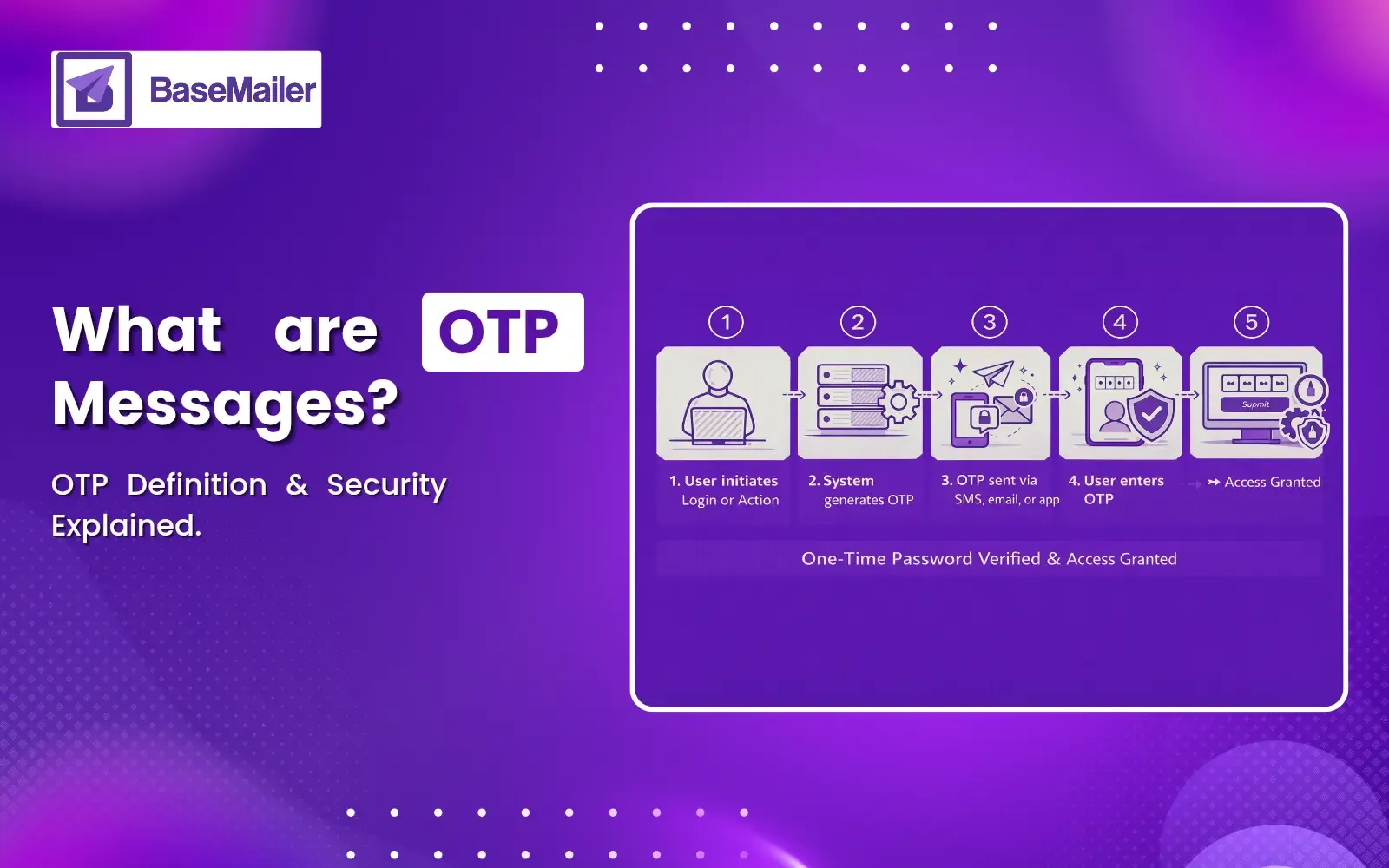
What are OTP Messages? OTP Definition & Security Explained
Key takeaways
- One-time passwords(OTP) allow users to authenticate their identity for secure access to online accounts, logins, and other sensitive activities.
- OTP messages are an addition to the security layer for banks, SaaS platforms, and other digital products that reduce the risks of hacking.
- Companies must use OTP as a transactional communication, which ensures messages are reliable, single-use, and sent by trusted systems.
- BaseMailer enables teams to use Airtable for sending secure OTP and transactional emails directly from the base that gives strict data access control without any external data exports.
Every time a user logs in and verifies their account, or confirms a transaction, he/she is protected by an OTP message.
OTP messages have now become a standard security layer for banks, digital products, and Saas platforms, which help businesses verify user identity without relying on a single static password.
While most users are familiar with receiving an one time password, very few genuinely understand the OTP definition, how they work, and the practices that make an OTP secure.
In this blog, we will discover,
- What does OTP mean?
- How are OTP messages delivered?
- Difference between OTP and static passwords
- Also Best tool for sending OTP messages in the market.
What is OTP?
OTP stands for one-time password or one-time passcode. It is short, automatically generated code used to verify a user’s identity during logins, transactions, or other sensitive actions.
Unlike all the regular passwords, an OTP is only valid for a single use and expires within 10 minutes or a shorter time window; the code becomes invalid after use.
The main goal of OTP is to reduce the risk of unauthorized access. Even if a password is leaked or guessed, a cyber attacker still cannot proceed without another fresh OTP generated for the specific session.
Besides, an OTP is widely used for account login, payment confirmation, password reset, and identity verification.
What are OTP messages?
OTP messages are the ones delivered from the system to the user. These messages can be sent through multiple channels, such as SMS, emails, authenticator apps, or notifications.
Most of the users encounter OTP messages as a short SMS or email containing a 4-8-digit code with a message like “Use this code to verify your ABC login”. These messages are time-sensitive and designed to be used instantly.
OTP messages tend to play a critical role in security because the effectiveness of an OTP depends not just on code generation, but also on how securely the message is delivered.
How does OTP work?
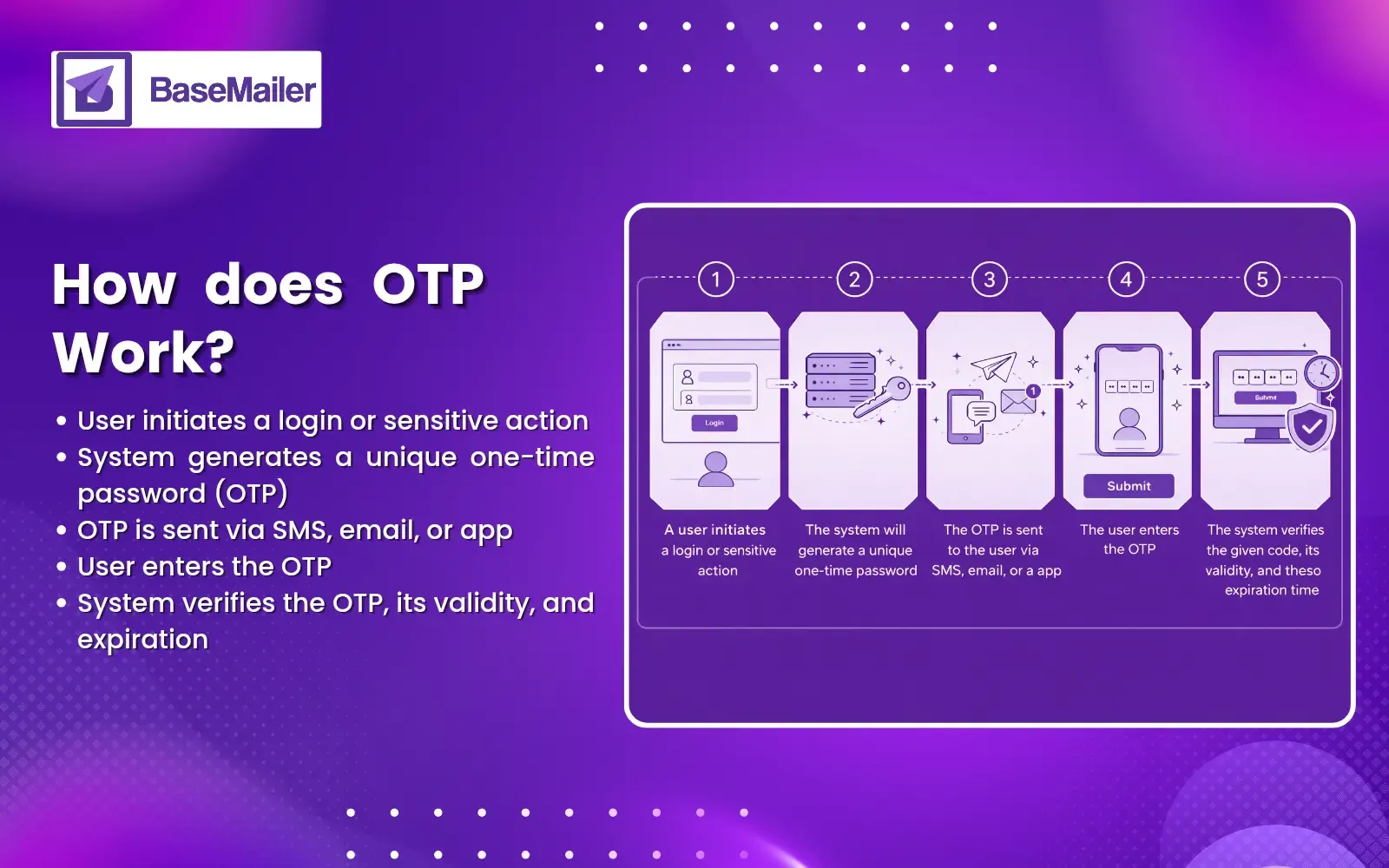
At the highest level, OTP authentication tends to follow a simple flow:
- A user initiates a login or sensitive action
- The system will generate a unique one-time password.
- The OTP is sent to the user via SMS, email, or an app(like Google Authenticator).
- The user enters the OTP.
- The system verifies the given code, its validity, and the expiration time.
If the OTP is right and valid, the access is granted. It is not that the request to access is rejected. Besides, most systems use either time-based (TOTP), which expires after a fixed time, or counter-based OTPs (HOTP) that are changed after each use.
Difference between OTP messages & regular password messages!
Best Practices for Safely Handling OTP Messages!
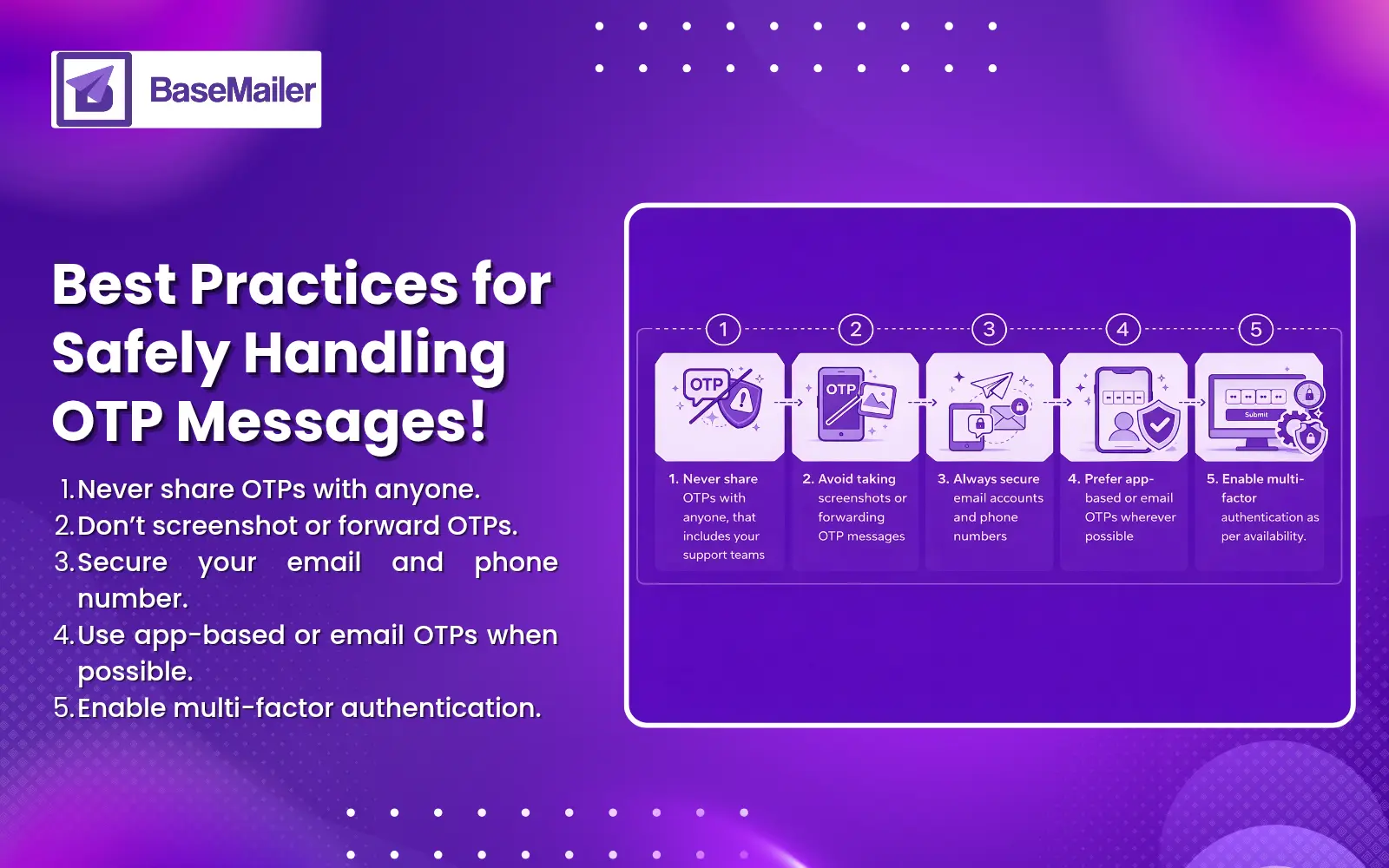
To maintain OTP security, users and businesses should follow these best practices:
- Never share OTPs with anyone, that includes your support teams.
- Avoid taking screenshots or forwarding OTP messages.
- Always secure email accounts and phone numbers.
- Prefer app-based or email OTPs wherever possible.
- Enable multi-factor authentication as per availability.
Many users notice OTP messages directly disappearing from their inbox; the auto delete OTP meaning is tied to preventing misuse of the sensitive codes.
Using Basemailer for OTP & transactional emails!
Code generation is not the end of OTP security for many companies. Delivery security is also crucial.
Teams utilizing Airtable can send transactional and OTP emails straight from their bases with BaseMailer. OTP codes are kept in Airtable fields that can be dynamically added to email templates and sent via SMTP, Gmail, or Outlook as one-time messages.
BaseMailer assists companies in safely delivering OTP emails without exporting data or depending on outside tools, thanks to its native Airtable integration, automation-ready workflows, and stringent data access controls.
Wrap up!
OTP messages are now a crucial component of contemporary digital security. They shield users from many dangers of static passwords by providing time-limited verification.
However, the delivery of codes is just as important to OTP security as their generation.
Businesses can effectively scale authentication workflows while preserving user trust by using safe, dependable OTP messaging tools like Basemailer.
Frequently Asked Questions!
1) What is an OTP message?
OTP is used to confirm identity during transactions, sensitive actions, password resets, and logins.
2) Are OTP messages safe?
Yes, especially when paired with multi-factor authentication, OTP messages are more secure than static passwords.
3) Is it possible to send an OTP by email?
Indeed, OTPs are sent via email for secure verification by numerous SaaS platforms and internal tools.
4) Why are OTP messages automatically erased?
To increase security and lessen the exposure of sensitive codes, OTP messages automatically expire.